What is Data Fabric?
Data Fabric is a combination of architecture and technology designed to help organizations manage heterogeneous and diverse data that spans across multiple silos, locations, and formats.
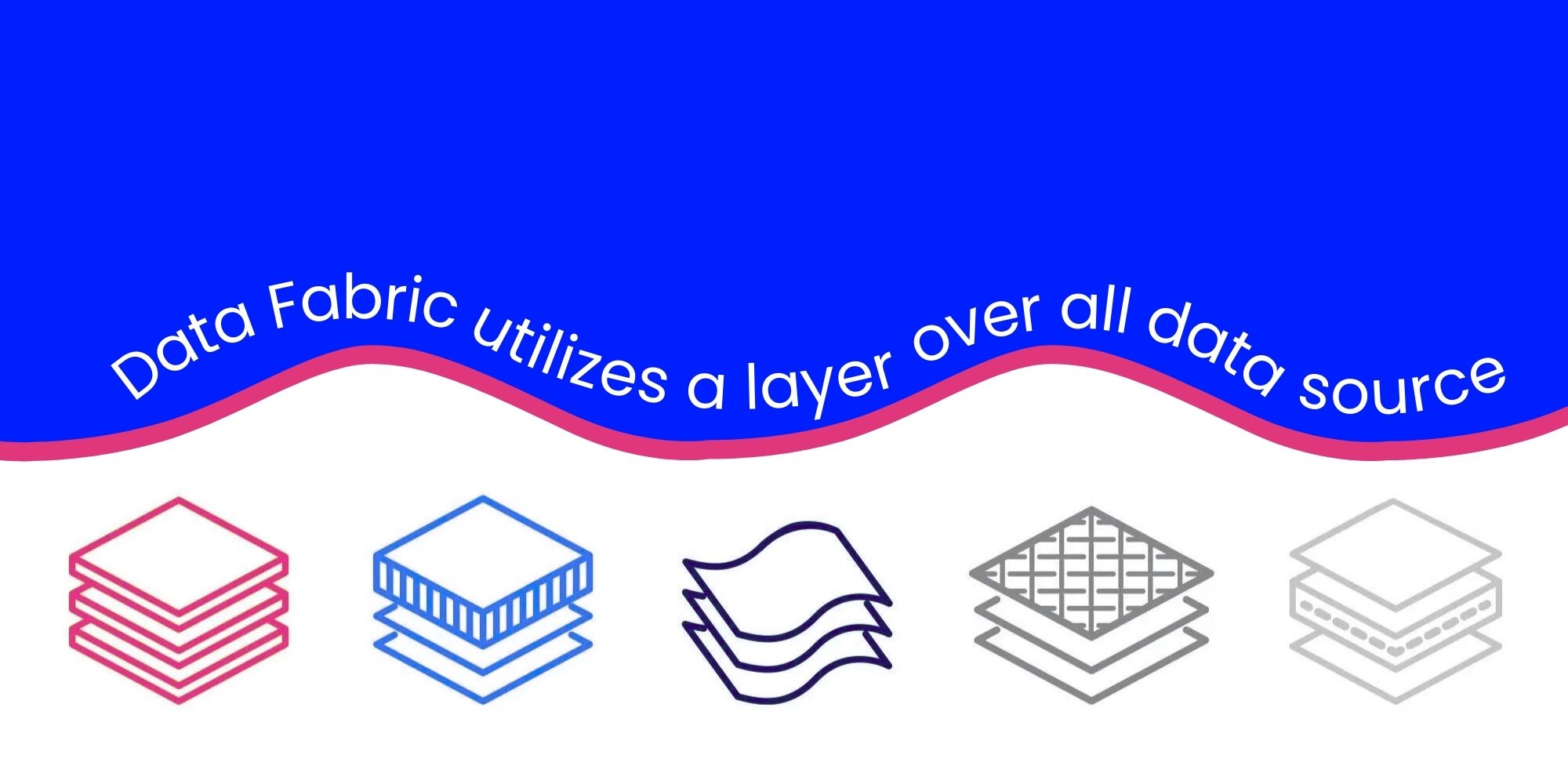
Think of it as a queryable layer implemented over your existing data repositories, including data centers, cloud providers, and the edge. This layer provides a unified, logical data architecture that allows users to access and query data seamlessly, regardless of where it is physically located or what format it is in.
Why is Data Fabric needed?
As organizational data stacks grow exponentially in complexity, Data Fabric provides a solution for overcoming challenges associated with centralized and siloed data management:
- Uniform access: It provides data teams with a uniform access layer across diverse and disparate datasets, making it easier to find actionable insights.
- Reduced effort and time-to-value: Compared to a centralized consolidated data approach to data architecture, a data fabric oriented approach considerably reduces the time and effort required by data teams to build end-to-end platforms.
- Improved usability: Data fabric helps organizations find and reuse data spanning across environments (from on-premises to cloud), which also improves its usability and the quality of key data assets.
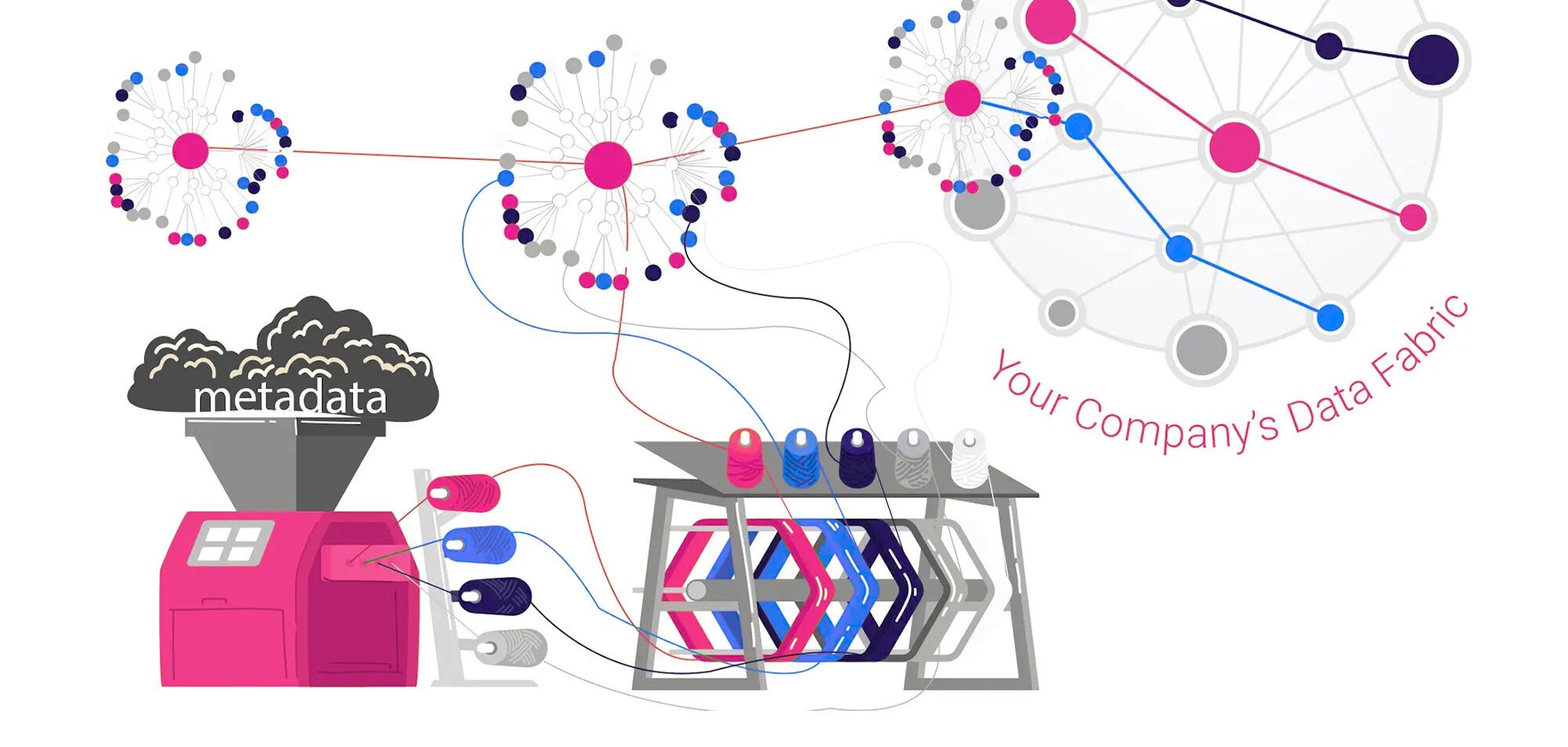
- Automated intelligence: The metadata layer, the core foundation of a data fabric, enhances data intelligence in the ecosystem by recognizing different types of data, what data is relevant, and what data needs privacy controls and governance.
How does Data Fabric work?
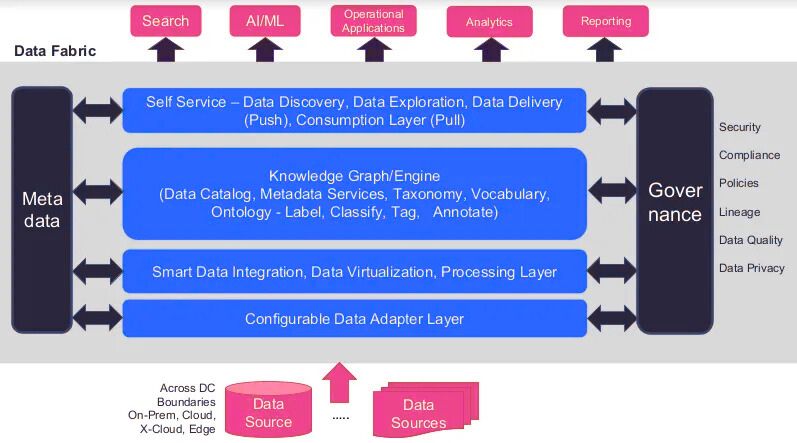
Data Fabric is not a single, off-the-shelf tool, but a software layer composed of several functional services that manage data access and governance:
- By providing a single point of access that is virtualized and integrated across all data silos, data fabric empowers both operational and analytical use cases, making data discovery easier.
- Data fabric leverages machine learning, AI, and NLP techniques to automate data discovery, classification and curation processes, leading to faster time-to-value by accelerating data preparation and integration challenges
- It uses knowledge graphs to incorporate semantics and context, linking policies to data assets using business vocabularies and taxonomies. This ensures data is consistently integrated and understood according to its business meaning, supporting AI and analytical applications.
- By leveraging metadata data fabric enforces governance, policy and compliance rules, improving data quality and facilitating the automated discovery of private, critical data elements.
- It enables a virtualized, integrated, metadata-driven approach to data management.
Some of the functional components of a data fabric are shown in the following diagram:
When to use Data Fabric?
Although the data fabric approach helps organizations generate actionable insights out of the ever-increasing volumes of data, disconnected across silos, it’s not a one size fits all solution.
Data fabric solutions are best suited for large organizations with the following requirements:
- A rapidly growing data footprint, across myriad data sources and data formats, stored across multiple geophysical locations, that need to democratize access to this data.
- Highly interrelated data and experience challenges to unify data from different business units and departments.
- Where the lack of business and domain context and unified semantics hinder the appropriate data usage.
Conclusion
Siloed data islands lead to siloed thinking and today’s data is generated, stored, and used across data centers, edge, and cloud providers.
Incorporating and building data fabric within an enterprise is a journey. It does not happen overnight nor is it something that is available as an off-the-shelf pre-packaged tool. Also, it does not replace data warehouses, data lakes, or lakehouses. Instead, it makes them more accessible by aggregating data from heterogeneous data sources. It accomplishes that by providing a virtualization layer that assimilates data with zero copy, ensuring privacy and regulatory compliance.
Although data fabric has not become mainstream, organizations are increasingly adopting pieces of this approach when building data solutions. It’s an evolution of enterprise data architecture addressing the two most challenging aspects of data management – getting a handle on data across data silos and semantically integrating that data.
Want to learn now to connect, share, and access data effectively across the enterprise?