
Graphwise: Setting the Gold Standard for Compliant Enterprise AI
How Graphwise’s ISO/IEC 42001-certified GraphRAG technology helps enterprises meet EU AI Act compliance requirements by providing transparent, explainable, and auditable AI outputs grounded in verified knowledge graphs.

Main Takeaways
- ISO 42001 certification gives Graphwise a verifiable framework for EU AI Act compliance
- GraphRAG grounds every AI output in verified data, eliminating the "black box" problem
- Enterprises inherit Graphwise's compliance infrastructure, reducing their own regulatory burden
- Annual third-party audits provide ongoing independent verification without extra customer effort
At a time when the EU AI Act or other similar frameworks such as the NIST AI Risk Management Framework have gone from being a proposal to becoming a binding legal reality, enterprises face a critical challenge: how to harness the power of large language models (LLMs) without compromising on safety, transparency, and legal accountability.
At Graphwise, we have anticipated this shift. By achieving the ISO/IEC 42001:2023 certification — the world’s first international standard for AI Management Systems (AIMS) — we haven’t just checked a compliance box; we have codified a rigorous development framework for our next-generation GraphRAG software.
ISO 42001: Our blueprint for EU AI Act readiness
Responsible AI frameworks demand that AI systems be safe, transparent, and explainable. While these frameworks provide the “What,” ISO 42001 provides the “How.” Graphwise utilizes this international standard to guide the entire lifecycle of our Graph RAG development:
- Systematic risk management: We apply the ISO-mandated risk-based approach to identify and mitigate biases and “hallucinations” at the architectural level.
- Data governance and integrity: Our certification ensures that the data fueling our knowledge graphs is handled with the highest standards of quality and lineage — a core requirement of the EU AI Act’s data governance mandates.
- Transparency by design: ISO 42001 requires clear documentation and explainability, which we manifest through our “Explainable Conclusion” engine in GraphRAG.
Why GraphRAG is the “Trust Layer” for your AI
Traditional RAG (Retrieval-Augmented Generation) often falls short of regulatory standards because it relies on “flat” vector searches that lack context. Graphwise GraphRAG goes further by combining LLMs with a semantic knowledge graph.
Its key compliance features are:
- Multi-hop reasoning: Unlike keyword searches, GraphRAG understands complex relationships, providing more accurate and contextually aware answers.
- Deterministic grounding: Every output is anchored to your proprietary, verified data, virtually eliminating the risk of misinformation.
- Audit-ready provenance: Every response includes clear citations and a “reasoning path,” allowing your compliance teams to see exactly why the AI reached its conclusion.
The customer advantage: accelerate your own compliance
When you choose us as a partner certified in ISO 42001, you aren’t just buying software — you are inheriting a compliant infrastructure that simplifies your own regulatory journey.
- Reduced due diligence: Graphwise’s third-party verified AI controls significantly lower the burden on your procurement and legal teams.
- Future-proofing: As regulations evolve, our ISO-aligned management system ensures that Graphwise software adapts proactively, not reactively.
- Accelerated “high-risk” approval: Graphwise operates under an ISO 42001 Artificial Intelligence Management System (AIMS), we provide “live evidence” — such as pre-packaged AI Impact Assessments and System Lifecycle documentation.
- Elimination of the “black box” liability: ISO 42001 requires maintaining rigorous Explainability and Interpretability controls. By using our GraphRAG, you inherit a “Traceability Chain” where every AI-generated answer is linked to a specific data source in your knowledge graph.
- Third-party vendor oversight: Our certification includes mandatory annual surveillance audits. This means an independent, third-party registrar is doing the “monitoring” for you. Instead of conducting a resource-intensive manual audit of Graphwise each year, you can fulfill your regulatory requirement to monitor and verify our compliance by simply maintaining a record of our current third-party certification.
- Ethical brand protection: ISO 42001 embeds Ethical Guardrails into the development process. By choosing a certified partner, you ensure that “Fairness” and “Bias Mitigation” are not just marketing buzzwords but are audited technical requirements, protecting your brand from the fallout of “rogue AI” incidents.
The EU AI Act is not a hurdle; it is a catalyst for better AI. By aligning our GraphRAG technology with the ISO 42001 standard, Graphwise provides the technical and legal “Trust Layer” your enterprise needs to innovate with confidence.
Ready to see the future of compliant AI?
Details
What is GraphRAG
Retrieval Augmented Generation or RAG enhances LLMs with external knowledge for more accurate, contextual question answering. See how RAG can evolve into GraphRAG, which uses knowledge graphs as a source of context or factual information.
Learn moreRecommended Content
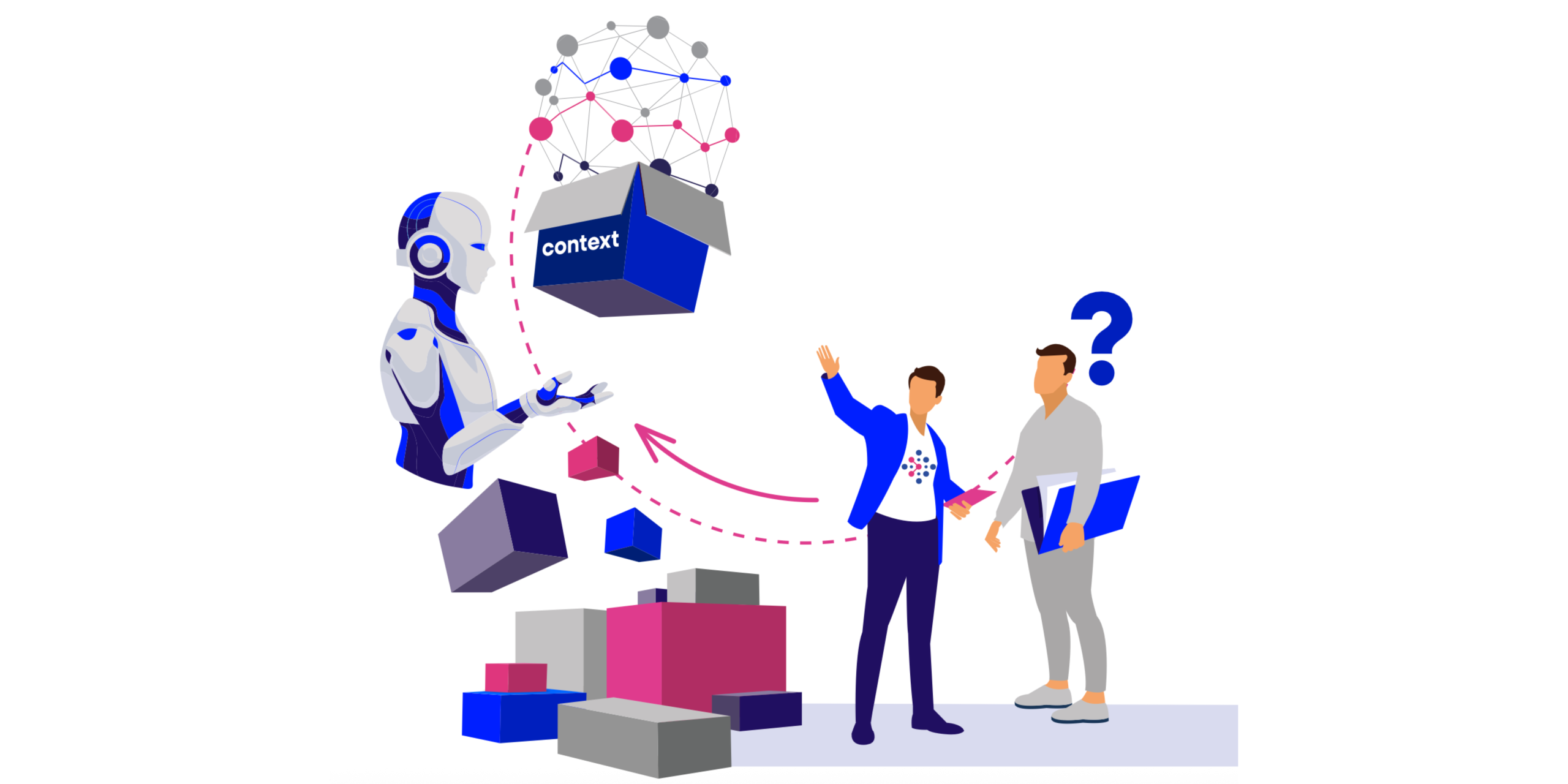
Graphwise GraphRAG
Scale your enterprise intelligence with a GraphRAG solution from Graphwise. Move from concept to production in days, not months.
Read more
Bring Your Enterprise Information Security Management System with GraphRAG to the Next Level
Read abou how GraphRAG systems enhance enterprise information security management by using knowledge graphs
Read more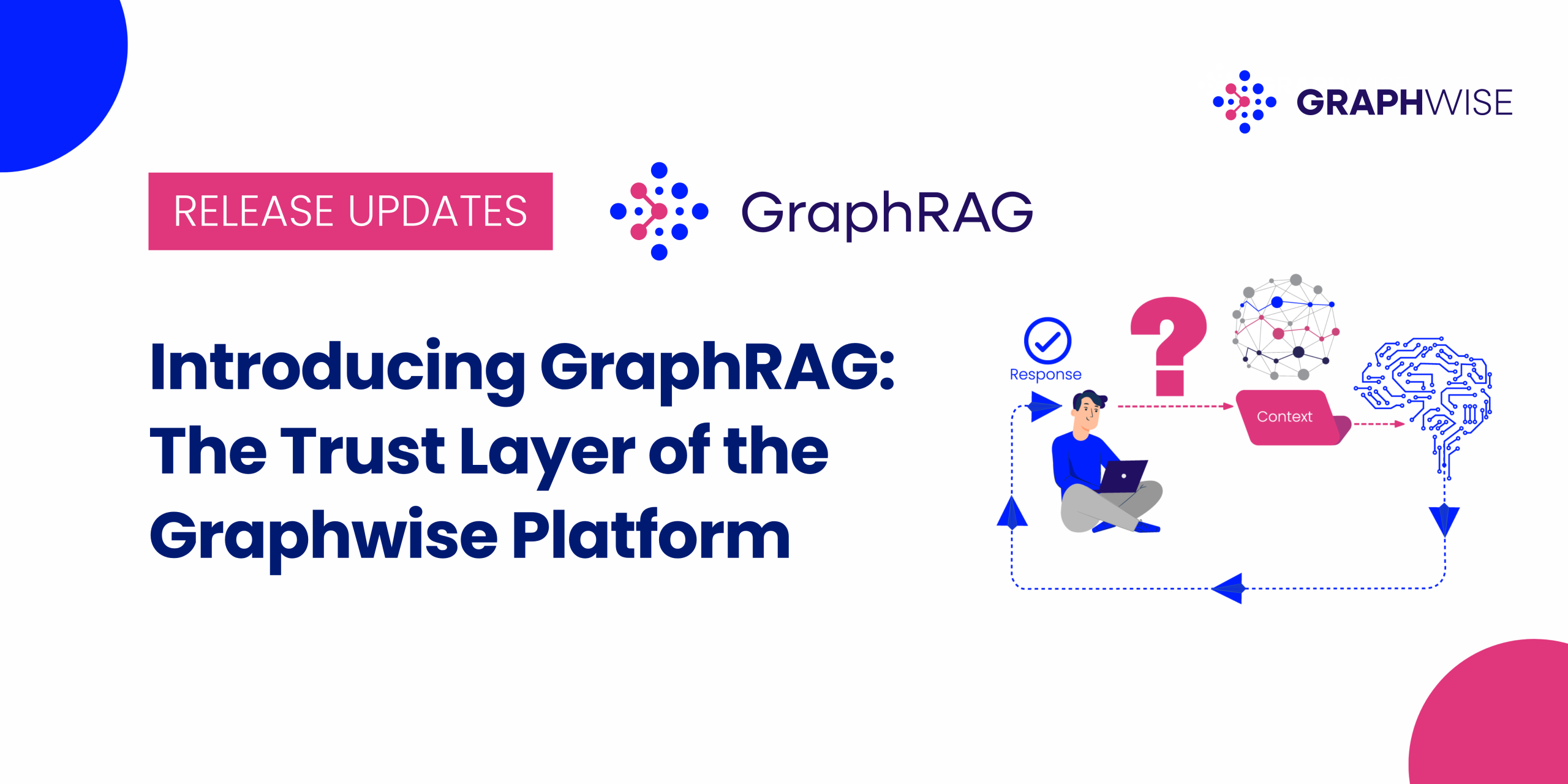
Introducing GraphRAG: The Trust Layer of the Graphwise Platform
Read about how GraphRAG beta introduces a new trust layer for generative AI in the Graphwise platform, making enterprise answers explainable, auditable, and context-rich.
Read moreFAQ
Any Questions? Look Here
Achieving ISO/IEC 42001:2023 certification provides organizations with a robust, internationally recognized framework for establishing an Artificial Intelligence Management System (AIMS), ensuring that AI technologies are developed and deployed responsibly, ethically, and transparently. Key benefits include structured risk mitigation to address challenges like algorithmic bias and data security, enhanced trust with stakeholders by demonstrating a commitment to accountable AI practices, and proactive readiness for emerging global regulations such as the EU AI Act. Furthermore, the certification helps align AI initiatives with core business strategies, fosters continuous improvement through the Plan-Do-Check-Act cycle, and offers a significant competitive advantage by differentiating the organization as a leader in trustworthy and secure AI governance.
ISO/IEC 42001:2023 is the inaugural international standard for an Artificial Intelligence Management System (AIMS), providing a structured framework for organizations to develop, provide, or use AI-based products and services responsibly and ethically. Its core requirements center on the establishment and continuous improvement of an AIMS that is integrated with existing organizational processes, mandating systematic AI risk and impact assessments to identify and mitigate potential harms to individuals and society. The standard is anchored in key principles such as transparency, explainability, accountability, and fairness, requiring specific controls for bias detection and mitigation, data integrity, and algorithmic transparency throughout the AI system lifecycle. By utilizing a Plan-Do-Check-Act (PDCA) methodology, ISO/IEC 42001:2023 ensures that AI governance remains adaptive to technological advancements while maintaining robust security and data protection measures in alignment with global regulatory expectations.
AI compliance infrastructure is a multifaceted framework designed to align artificial intelligence systems with legal, ethical, and operational standards through a combination of technical and governance components. At its core, it relies on a Dynamic Compliance Knowledge Graph to model complex relationships between evolving regulations, organizational risks, and enterprise assets, providing a unified "single source of truth." Key technical pillars include GraphRAG for grounding AI outputs in verified data to eliminate hallucinations, and a Continuous Traceability Engine that automates data lineage and maintains live audit trails for regulatory reporting. Furthermore, the infrastructure integrates AI governance modules that link models directly to data owners and risk controls, alongside explainability layers that ensure algorithmic decisions are transparent and auditable. Together, these components facilitate proactive risk management and continuous monitoring, transforming manual, fragmented compliance processes into an automated, trustworthy ecosystem.
AI compliance infrastructure ensures data privacy by establishing a dynamic, graph-based "privacy control plane" that maps the complex relationships between sensitive data assets, AI models, and regulatory obligations like GDPR and the EU AI Act. By utilizing knowledge graphs and semantic metadata, the infrastructure automates the discovery and classification of Personally Identifiable Information (PII), enabling precise tracking of data lineage and cross-border flows to verify that models only process data under a valid lawful basis. Furthermore, it integrates automated Data Protection Impact Assessments (DPIAs), continuous risk scoring via graph neural networks, and policy-driven access controls directly into the AI lifecycle, transforming manual compliance into a proactive, real-time system that detects privacy anomalies and enforces data minimization and purpose limitation across the enterprise.