

By combining knowledge graphs as the central privacy control plane with LLMs, NLP, GenAI, and machine learning, organizations can automate data privacy compliance, transform static risk management into real-time Data Privacy Intelligence, and govern emerging AI use cases effectively.
Data privacy has shifted from a checkbox exercise to a board-level risk.
Global regulations such as the EU General Data Protection Regulation (GDPR) require organizations to maintain detailed Records of Processing Activities (RoPA) (Article 30) and to perform Data Protection Impact Assessments (DPIAs) for high-risk processing (Article 35).
In parallel, frameworks such as the NIST Privacy Framework 1.1 help organizations treat privacy risk at the same level as cybersecurity and enterprise risk.
Yet most privacy teams still live in spreadsheets, manual questionnaires, and disconnected tools. That makes it hard to answer basic questions quickly and confidently:
- Where is our most sensitive data actually flowing?
- Which third parties are the riskiest — and why?
- If a new law or contract clause changes, what’s impacted?
This is exactly where Knowledge Graphs, LLMs, NLP, GenAI, and ML fit together into a modern Data Privacy Intelligence stack.
In this post, we’ll walk through the role of each technology, how they interlock, and how Zenia Graph, together with Graphwise, helps organizations operationalize data privacy, manage legal and regulatory risk, and gain a competitive edge.
Knowledge Graphs: The Privacy Control Plane
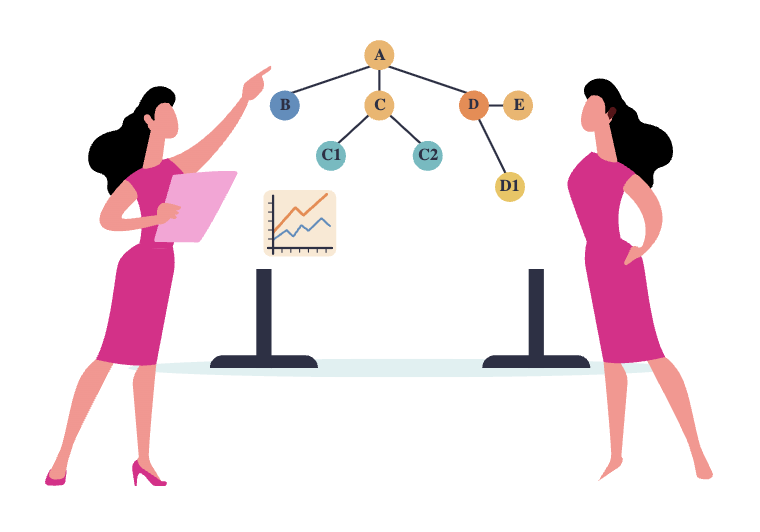
A knowledge graph is a connected map of everything that matters to privacy and AI governance: people, systems, data, vendors, regulations, risk, compliance and controls. Instead of scattered spreadsheets and rigid forms, you have a living, queryable model — a privacy control plane.
What a privacy knowledge graph models
Typical entities and relationships include:
- Systems & applications – CRM, HR, marketing, data warehouses, SaaS tools
- Data assets – tables, fields, documents, logs, events
- Data subjects & categories – customers, employees, minors, special categories
- Processing activities – purposes, lawful bases, retention, jurisdictions
- Vendors & third parties – roles, locations, data flows, contracts, sub-processors
- Controls & obligations – DPIAs, RoPAs, DPAs, SCCs, DSAR workflows, retention rules
- Risk Factors – Threats (Ransomware, Phishing), Vulnerabilities (CVEs), Likelihood vs. Severity scores
- Legal Frameworks – Regulations (GDPR, AI Act), Specific Articles, Lawful Bases, Consent versions
- Mitigations – Encryption levels, Pseudo-anonymization, Access controls, Residual risk status
- Incidents – Breach events, Notification deadlines, Root cause paths, Remediation steps
With this in place, you can ask questions like:
- “Show me all processing involving biometric data in the EU with no DPIA.”
- “Which vendors receive EU personal data and lack updated SCCs?”
- “For this new feature, which datasets, systems, vendors, and risks are connected?”
- “If we patch the SQL vulnerability in ‘Legacy Payments’, how much does our global Risk Score drop?”
- “Which data transfers to non-EU countries rely on SCCs but are missing a Transfer Impact Assessment (TIA)?”
- “Show me all ‘High Severity’ risks affecting ‘Special Category Data’ that remain unmitigated for > 30 days.”
Why graphs beat rigid lists and forms
Most legacy platforms sit on relational or proprietary databases with fixed schemas. That works when:
- Data flows are simple
- Schemas rarely change
- Only one region or regulation matters
It breaks down when:
- The same attribute (e.g., “email address”) flows through dozens of systems and vendors
- New regulations (like the EU AI Act) or AI use cases appear faster than the schema can be updated
- You must understand not just what data exists, but how it moves and why it is allowed
Graphs are:
- Flexible – adding new node types (e.g., “AI model,” “training dataset,” “data residency zone”, “new risk”) and relationships doesn’t require redesigning every form.
- Relationship-first – flows, dependencies, and cross-border paths are modeled naturally.
- Contextual – ideal as the context layer on top of existing scanners, catalogs, and logs.
Scanners and relational lists tell you what you have. The graph explains how it fits together and what it means for risk and compliance.
Data sovereignty and localization
For global companies, data sovereignty and localization are now core requirements. Because regions, legal entities, and data stores are first-class graph nodes, you can:
- Visualize cross-border data flows between cloud regions, vendors, and subsidiaries
- Answer: “Which EU data flows to US-based systems?” or “Where do we process data for Brazilian customers?”
- Support localization policies, such as keeping HR data for specific countries within certain regions
List-based tools show you columns filtered by “country.” A graph shows the network of flows — something executives, auditors, and regulators understand immediately.
LLMs and Graph RAG: Conversational Access to Compliance
Once your privacy landscape is modeled as a knowledge graph, LLMs turn it into an interactive assistant.
Instead of learning SPARQL or hunting through dashboards, privacy, legal, or business stakeholders can ask:
- “Which vendors are high-risk in Europe and why?”
- “What personal data do we store about candidates in Germany, and where does it go?”
Graph-aware LLMs (Graph RAG)
Standard RAG pulls text chunks from documents. Graph RAG retrieves structured facts and relationships from the graph and passes them to the LLM as context.
Example prompts:
- “Summarize all high-risk processing involving biometric data in France and list missing DPIAs.”
- “Explain why Vendor X is marked high-risk and recommend remediation steps.”
- “If we add a new AI model trained on dataset Y, what privacy and transfer risks arise?”
Because answers are grounded in the graph, they are:
- Traceable – linked back to concrete systems, vendors, and documents
- Consistent – aligned with a single source of truth
- Explainable – supported by explicit graph paths and attributes
LLMs become a privacy copilot that:
- Lets users “Talk to Your Graph” in natural language (via Graphwise)
- Provides just-in-time guidance inside workflows (e.g., suggesting lawful bases or flagging high-risk use cases)
- Generates short, audience-specific summaries of RoPAs, DPIAs, and audit findings
NLP: From Documents and Policies to Structured Signal
Most privacy-relevant information starts as unstructured text:
- Data Processing Agreements and terms of service
- Vendor security questionnaires
- Privacy notices and internal policies
- Incident and logging reports
- DSAR/complaint tickets
NLP turns this unstructured content into structured graph entries.
Core capabilities include:
- PII & data category detection – spotting personal and sensitive data in schemas, samples, or documentation
- Contract & policy understanding – extracting roles (controller/processor), purposes, retention, locations, and safeguards
- Entity & relationship extraction – mapping systems, vendors, datasets, and obligations into the graph
- Classification & tagging – labeling documents as DPIAs, DPAs, policies, retention schedules, etc., and linking them to processing activities
Scanner tools like BigID or Securiti do a great job finding sensitive data. Zenia Graph ingests those outputs and adds business context: who owns the system, which purpose the data serves, what contracts apply, and which legal regimes matter.
This continuous ingestion keeps the graph — and therefore your privacy posture — up to date, instead of relying on annual surveys and stale forms.
Generative AI: Drafts, Explanations, and “What-If” Analysis
Generative AI sits on top of the graph and NLP layer to remove manual drafting work.
Typical workflows:
- Drafting DPIAs & risk assessments – using graph data about systems, data categories, risks, and controls to pre-fill DPIA assessments, streamlining the mandatory Human-in-the-Loop (HITL) review process.
- RoPA generation and updates – automatically creating and updating RoPA entries as systems, vendors, and purposes change
- DSAR support – assembling first-draft responses by pulling together where an individual’s data lives, why it is processed, and how long it is kept
- “What-if” scenarios – answering questions like: “If we move this workload from the US to the EU, or swap Vendor A for Vendor B, how does that impact risk, transfers, and required controls?”
Generative AI doesn’t replace the privacy officer or in-house counsel. It removes repetitive copy-and-paste tasks so experts can focus on decisions, negotiation, and strategy.
ML and GNNs: Real-Time Risk Scoring
Machine learning (ML) and graph neural networks (GNNs) turn your graph into a real-time risk engine.
ML for context-aware risk
With graph features available, ML can:
- Score vendor and data-sharing risk using attributes like data sensitivity, jurisdiction, certifications, incident history, and control coverage
- Detect anomalies in access patterns (for example, a sudden spike of HR data moving into an unusual SaaS tool)
- Predict missing controls – highlighting where lack of encryption, retention limits, or DPAs is likely to cause problems
Instead of flat checklists, you get risk scores that understand context.
GNNs with PyG: learning risk from relationships
In privacy, risk is rarely about a single node; it’s about how nodes are connected. That’s where GNNs and PyTorch Geometric (PyG) come in:
Steps:
- Build a learning graph
- Nodes: vendors, systems, datasets, jurisdictions, products
- Edges: data flows, contracts, processing relations, regulatory links
- Features: sensitivity, locations, certifications, incidents, missing controls
- Train a GNN to predict risk
- Use historical incidents, audit findings, and red flags as training labels
- Let the model learn patterns like “vendors with this neighborhood and these gaps tend to be high risk”
- Score nodes and relationships
- Every vendor, system, or flow receives a graph-aware risk score
- Scores can be refreshed when reality changes (new vendor, new flow, expired certification, new AI model)
- Drive real-time heat maps
- Privacy, legal, and security teams see live risk dashboards instead of static annual reports
- They can justify priorities to the board and regulators with clear evidence and reasoning
AI Governance and the EU AI Act
The EU AI Act and similar initiatives mean organizations must govern not just data, but AI models:
- Which models exist and who owns them
- Which datasets (and personal data categories) trained them
- What decisions they influence
- What risks and controls apply
A knowledge graph is a natural backbone for AI governance:
- Models become first-class nodes linked to training data, business owners, and risk assessments
- Data lineage captures which personal data feeds which models, under what lawful basis
- Policies, monitoring controls, and impact assessments attach directly to AI models, just like to systems and vendors
Vendors like Securiti are pivoting hard to “AI governance.” Zenia’s advantage is that the same graph-based infrastructure that powers data privacy compliance can govern data + models + obligations in one consistent view.
A Unified Data Privacy Intelligence Stack
Put together, the stack looks like this:
- Ingest & Discover – Connectors + NLP
- Bring in schemas, logs, scanner outputs, contracts, policies, and regulations
- Extract entities, relationships, and privacy semantics
- Model & Govern – Knowledge graph
- Maintain a shared model for RoPAs, DPIAs, vendors, AI models, and cross-border flows
- Analyze & Quantify – Analytics + ML + GNNs
- Compute and update risk scores, detect anomalies, cluster similar activities and vendors
- Interact & Assist – LLMs + Generative AI
- “Talk to Your Privacy Graph” via Graphwise
- Draft DPIAs, RoPAs, DSAR responses, AI model registers, and remediation plans
- Orchestrate & Execute – Agentic Automation
- Move beyond conversation: empower AI agents to interact with API hooks, autonomously suspending vendor access or triggering security protocols when risk thresholds are breached
- Act & Learn – Workflows + feedback
- Trigger tasks, capture decisions, and feed results back into the graph for continuous improvement
The result: continuous, graph-driven intelligence, not static compliance snapshots.
How Zenia Graph and Graphwise Compete — and Win
Zenia Graph specializes in data privacy, AI governance, and third-party risk using knowledge graphs and AI. Graphwise delivers the conversational interface that lets users talk to that graph and RDF graph database.
What Zenia Graph provides
- Privacy & AI Governance Graph – a domain-specific model for processing activities, data, systems, vendors, contracts, AI models, and controls
- Connectors for multi-cloud and hybrid – ingesting from AWS, Azure, GCP, Snowflake, Databricks, on-prem, and existing compliance and discovery tools
- Graph-native risk analytics – ML and GNN-based scoring, risk heat maps by line of business, region, product, and vendor
- “Talk to Your Privacy Graph” assistant (via Graphwise) – natural-language Q&A with traceable, graph-backed answers
- Generative content workflows – DPIAs, RoPAs, DSAR responses, AI model registers, and internal briefings, all grounded in the graph
Positioning vs. incumbents
- Vs. OneTrust / TrustArc (rigid form-based platforms)
- They focus on static forms and checklists.
- Zenia delivers a dynamic, graph-based model that evolves as systems, vendors, AI models, and laws change.
- Vs. BigID / Securiti (scanner-first tools)
- They are excellent at discovering PII and sensitive data.
- Zenia is the context layer: understanding why that data is there, who owns it, what contract governs it, and which obligations apply.
- Vs. Microsoft Purview (ecosystem-centric)
- Purview shines in Microsoft-heavy stacks.
- Zenia is intentionally ecosystem-agnostic, unifying multi-cloud and hybrid environments where most real enterprises live.
Conclusion: From Static Compliance to Living Intelligence
Organizations that can see, explain, and prove how they use personal data — and how they govern their AI models — will win the trust of regulators, customers, and boards.
By combining:
- Knowledge graphs as the privacy and AI governance control plane
- Our Graph Schema aligns with international standards like W3C DPV, ensuring interoperability.
- LLMs as an intelligent, conversational interface
- NLP to bring unstructured evidence into the graph
- Generative AI to draft and explain privacy and AI artifacts
- Agentic workflows to autonomously orchestrate remediation, enforce controls, and execute response protocols
- Machine learning and GNNs to quantify and detect risk in real time
…you can transform privacy from a fragmented, manual burden into a connected, intelligent competitive advantage.
Zenia Graph, together with Graphwise, helps organizations make that shift — turning rigid, form-based compliance into a living Data Privacy Intelligence Platform that keeps pace with regulation, technology, and business change.
Ready to stop filling out static forms and start managing real-time intelligence?