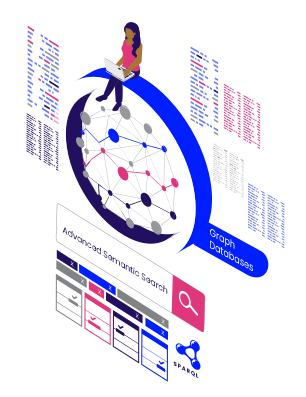
Semantic search is a sophisticated technology that optimizes how we explore the internet or the internal systems of an organization. Unlike traditional search based on keywords matching, it enables AI systems to understand the meaning of concepts and the relationships between them, mimicking human cognitive associations.
For example, if we want to find what European politicians say about global warming, a search query like: “European politicians global warming” is very likely to miss documents mentioning Boris Johnson, “climate change”, “rising sea level” or “greenhouse gas emissions”.Semantic search recognizes these as related concepts, ensuring no critical information is left behind.
In order to offer such enhanced search experience, this type of search employs a set of semantic technology techniques for retrieving knowledge from richly structured data sources. These techniques transform structured and unstructured data into a more intuitive and responsive knowledge paradigm – the knowledge graph – and enable highly contextual and personalized results.
Why do we need semantics?
As the digital landscape grows, it becomes increasingly challenging for machines to process and retrieve information effectively. While it is easy for humans to decide whether two or more things are related based on our cognitive associations, computers struggle and often fail to do it.
This is where semantic search can come to the rescue. Unlike traditional lexical search where search engines look for literal matches of the query words and their variants, this new generation of searching works on the principles of semantics. Or simply put, it tries to interpret natural language the way humans would.
In this way, by complementing the standard free text search with a more powerful concept search, semantics allows machines to gain a better understanding of what users may want and then offer more relevant answers.
Knowledge craph + text analysis = better search results
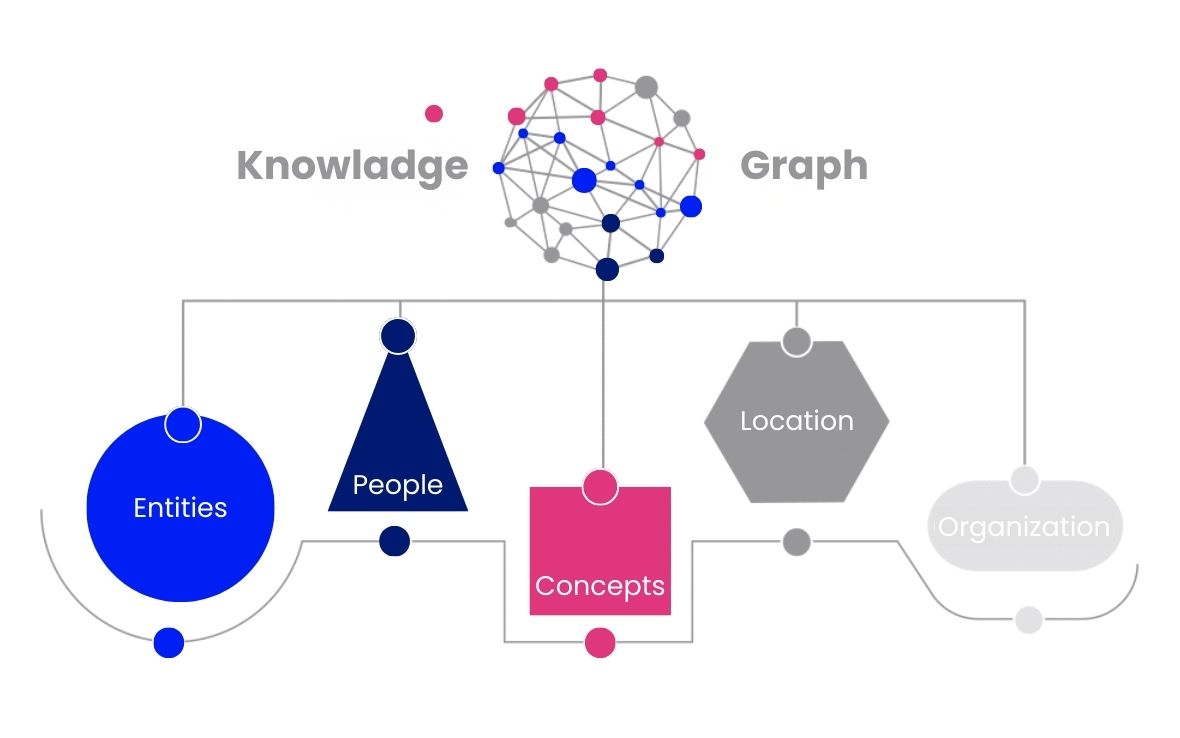
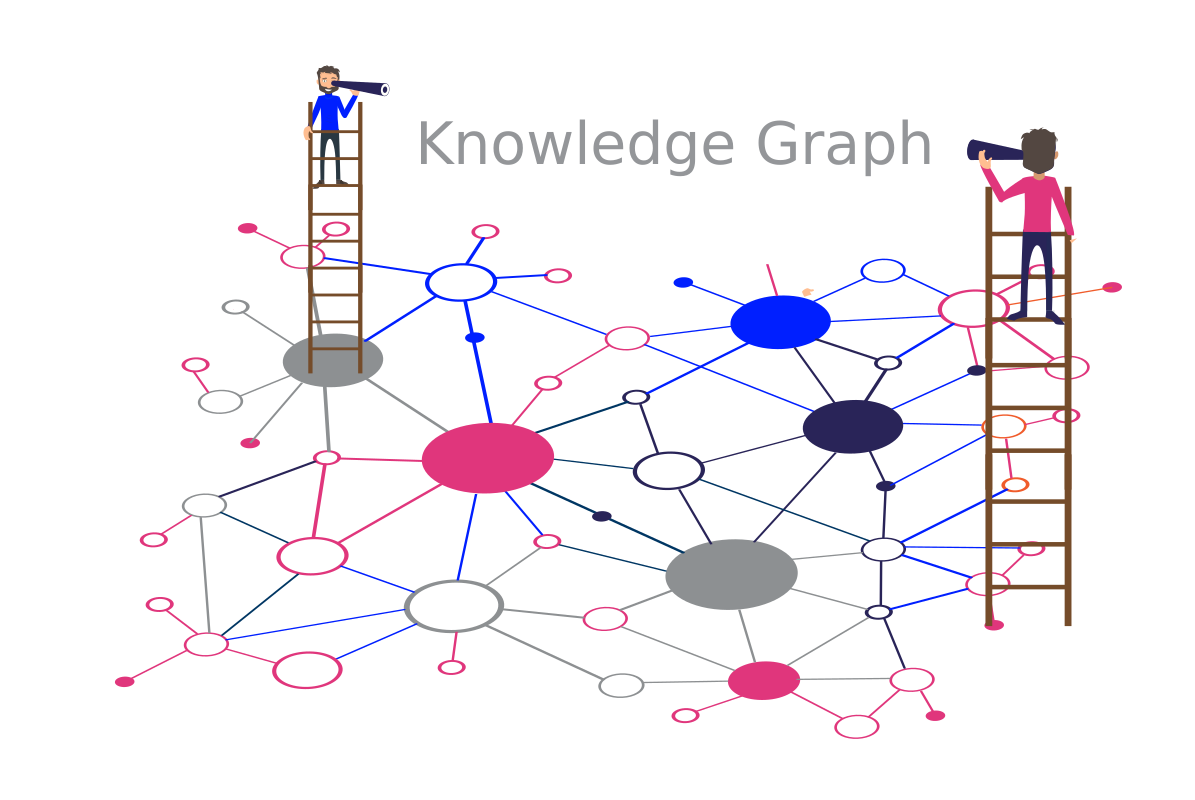
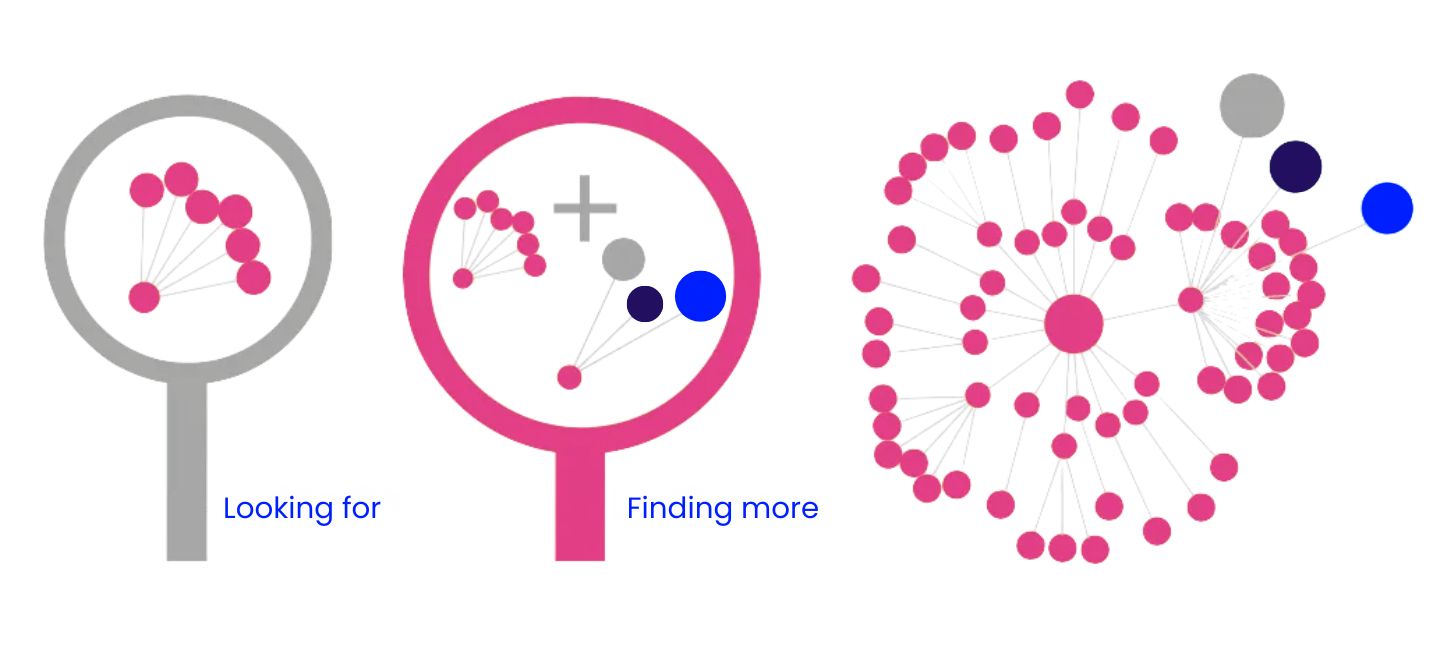
One of the main mechanisms behind the ability of semantic search to provide more meaningful results is the knowledge graph. It integrates diverse data describing entities (e.g., people, organizations, locations, etc.) and the specific concepts in a target domain as well as the relationships between them. At the end of the process, all this data is represented as a huge network of related facts that could be explored in many different ways.
Knowledge graphs need to be combined with text analysis in order to help free-text search. Semantic annotation and indexing techniques (like those implemented in the Graphwise Platform) discover which concepts in the knowledge graph are mentioned in the text. Documents are indexed by properly identified entities and concepts, rather than just by ambiguous strings.
As a result, by analyzing the concepts in the query and the relationships between them, semantic search is able to provide a suitable response even if the results don’t contain the exact wording of the query.
The perks of semantic search
As we can see, semantics and knowledge graphs empower a much more complete understanding of what our searches mean today. But there are other perks of semantic search:
- It’s context-aware – it identifies objects relevant to our specific task and filters results based on their unique properties.
- It’s highly personalized – it returns results more closely aligned with our interests and preferences based on our search history, our location, etc.
- It’s capable of differentiating between different concepts – it disambiguates between similar entities (e.g., “Apple” the company, the fruit, NYC or a product).
- It’s extensively interlinked – it recognizes multiple references to the same entity and can provide additional information related to the query such as news, photos, facts, social media accounts, etc.
A quick takeaway
The impact of semantic search on the way we look for content and query systems has been dramatic. Its implications range from discovering non-obvious relationships between facts, through predictive search, all the way to enabling predictive search and conversational AI.
Using semantics and knowledge graphs offers unique capabilities for exploration, query and search as well as other content management tasks such as classification, recommendation, etc. By bridging the language gap between humans and machines, semantic search takes us further on our quest for meaningful information and knowledge discovery.
Semantic search is not just a theoretical concept – it’s transforming how organizations interact with their data in real-world environments. A powerful example of this in action is how Graphwise brings semantic search to Microsoft 365, turning scattered information into an intelligent, connected and domain-aware knowledge hub.
Want to learn more about Graphwise for Microsoft 365?