
The Market Is Moving Too Fast to Get Enterprise AI Right on Your Own
Join us for the Graphwise AI Summit 2026: a free two-day online event where enterprise practitioners share the governance, infrastructure, and business decisions behind AI that actually makes it to production.

Main Takeaways
- The Graphwise AI Summit 2026 runs October 7–8, free and fully virtual, with the recorded library available afterward.
- Day 1 focuses on turning AI investment into measurable ROI, covering taxonomy/metadata strategy, semantic layers, durable business cases, and governance models.
- Day 2 shifts to infrastructure and implementation, featuring agentic workflows, governance graphs, energy-sector data challenges, and real-world examples across banking, manufacturing, and pharma.
- Speakers span Accenture, Roche, AstraZeneca, DNV, EY, S&P Global, Avalara, and more, offering practical, peer-tested lessons rather than vendor pitches.
New AI tools and vendors show up every week. Most teams are making foundational decisions about governance, infrastructure, and business cases without much precedent to lean on.
With this in mind, on October 7–8, we are bringing together experts from Accenture, Roche, AstraZeneca, DNV, EY, S&P Global, and more for our annual Graphwise AI Summit. They’ll share the decisions they’re making today to build AI that scales tomorrow.
Both days run online, completely free. Register once and you’ll get the full library of recorded sessions to bring back to your team whenever you need it.
This year’s program spans multiple industries: mobility, energy, life sciences, and knowledge management.
Let’s have a quick look at the packed two-day agenda.
Day 1: Where ROI Meets Trust
Day 1 opens with a keynote from Atanas Kiryakov, President of Graphwise. From there, the day focuses on one question: how do you turn AI investment into something that actually shows up on the balance sheet? Monica Fulvio (ASHA), together with Kathleen Gollner and Ben Kass (EK), start at the practical end of that problem: content scattered across a dozen systems. They demonstrate how a shared taxonomy and metadata framework can turn it into a single searchable asset. Next, Helmut Nagy and Andreas Blumauer (Graphwise) take the same idea and follow the money. They explain why a shared semantic layer is what separates AI that scales from AI that stalls, using Graphwise’s own Knowledge Hub and Agentic Systems as the example.
The conversation then turns to the business case behind it. A panel featuring Toni Ressaire (Altuent), Leslie Farinella (Content Rules), and Ben White (Graphwise), moderated by Todd Blaschka (Graphwise), digs into what actually makes an AI business case durable enough to survive the next pivot. New tools and vendors show up every week, and few business cases survive the churn. Following that, Martin Romacker (Roche) narrows that question to governance specifically. Some of a company’s most valuable data assets are also its hardest to maintain. Roche’s answer is a hybrid model, balancing central oversight with the flexibility individual teams need. The result is smaller, focused ontologies built to solve one real problem well, instead of trying to model everything at once.
From governance, the day moves to execution. Manish Bachhania and Derek Rodriguez (Accenture) introduce Reinvention.AI, the company’s platform for putting AI to work through reusable industry assets, human-and-AI collaboration, and built-in security and compliance. At the center of Accenture’s approach sits Graphwise’s GraphDB, giving agentic AI the context it needs to act safely inside a large organization. After that, Barbara Dombrowski (EY) brings a fresh angle to the agenda in a session moderated by Rick Crane (Graphwise).
A second panel brings together Ghislain Atemezing (the European Union Agency for Railways) and Burkhard Kresser (Doppelmayr), moderated by Clemens Burmeister (Graphwise). They look at what knowledge graphs change in transportation and mobility, where data has to move across borders, vendors, and regulatory regimes that were never built to talk to each other. Part of that is proving trust to regulators and partners who aren’t data engineers themselves. Day 1 closes with a recap from Alan Morrison (AI Strategy Advisor) and Todd Blaschka, pulling the day’s threads on ROI and trust together and setting up the infrastructure conversations Day 2 builds on.
You’ll walk away with:
- A clearer view of what makes an AI business case durable
- A working model for balancing governance with flexibility
- A first look at how peers in pharma, transportation, and consulting are putting a semantic backbone to work
Day 2: Infrastructure and Implementation
Day 2 shifts from the business case to the engineering underneath it. It opens with a keynote from Andreas Blumauer, introducing a new model for how AI agents can help build and improve an organization’s semantic backbone, not just use it. These agents spot gaps in the system’s knowledge and route the right work to taxonomists, ontologists, data engineers, and domain experts.
Then, Michael Iantosca (Avalara) goes beyond the isolated documentation tasks most teams experiment with, showing a full agentive workflow where a multi-agent system handles content across its entire lifecycle. It’s a shift from AI as an assistant to AI as an active participant in the work itself. From content to the data underneath it, Ben Gardner (AstraZeneca) walks through a governance graph the company is building. It maps out where AstraZeneca’s data lives and exposes the semantic layer underneath. The goal is a clear, shared picture of how the company’s data and the meaning behind it fit together.
From there, the focus shifts to industry-specific challenges. A panel featuring Johan Wilhelm Klüwer (DNV Energy Systems), Antun Kraljevic (AI Technologies), and Andreas Kimsas (Statnett) looks at how knowledge graphs can solve the Energy sector’s toughest data problems. It’s a challenge DNV has taken on at an industry level, with its own recommended practice for a shared digital language. Back on the platform side, Vassil Momtchev (Graphwise) builds directly on Day 1’s semantic backbone sessions with a live demo. In it, he models the business logic first, then uses AI to activate messy, distributed data into something AI-ready. Rounding out the technical thread, Gianluca Generali (BitBang) shares real examples spanning Banking, Manufacturing, and Enterprise Knowledge Management, where solid semantic groundwork leads to smarter search and domain-specific AI assistants. Few teams have shipped a knowledge graph across that many industries at once.
Finally Agis Papantoniou (Cognizone) makes the case that most enterprise AI stalls not because the model is weak, but because nobody can defend the data it was given. The talk walks through a practical framework for making data AI-ready from the start. Szymon Klarman (S&P Global) picks up the same theme from a different angle. How well an AI assistant works depends less on the model and more on whether the meaning, reference data, and domain context behind it come through accurately. Day 2 wraps with a live Q&A and final remarks from Alan Morrison and Todd Blaschka.
You’ll walk away with:
- A look at how AI agents can help build a semantic backbone, not just use one
- A set of real examples of data foundations built for AI across tax, pharma, energy, banking, and financial data
- A practical case for building AI-ready data in from the start
Wrapping Up
No single team can track every shift in this market by itself. Trying to figure it out from vendor pitches alone gets expensive. What you get across these two days is real experience. It’s the actual decisions, trade-offs, and lessons from people facing the same pressure you are, across different industries.
Whichever sessions you catch live, the full recorded library is yours to share with your team afterward.
All live October 7–8, all yours to keep after.
Don’t miss it!

Details
Graphwise AI Summit
The Graphwise AI Summit 2026 is a two-day free virtual event bringing together business leaders and technical practitioners to share what’s working: the governance approaches, the architectural decisions, and the implementation lessons that move AI from pilot to production.
Learn moreRecommended Content
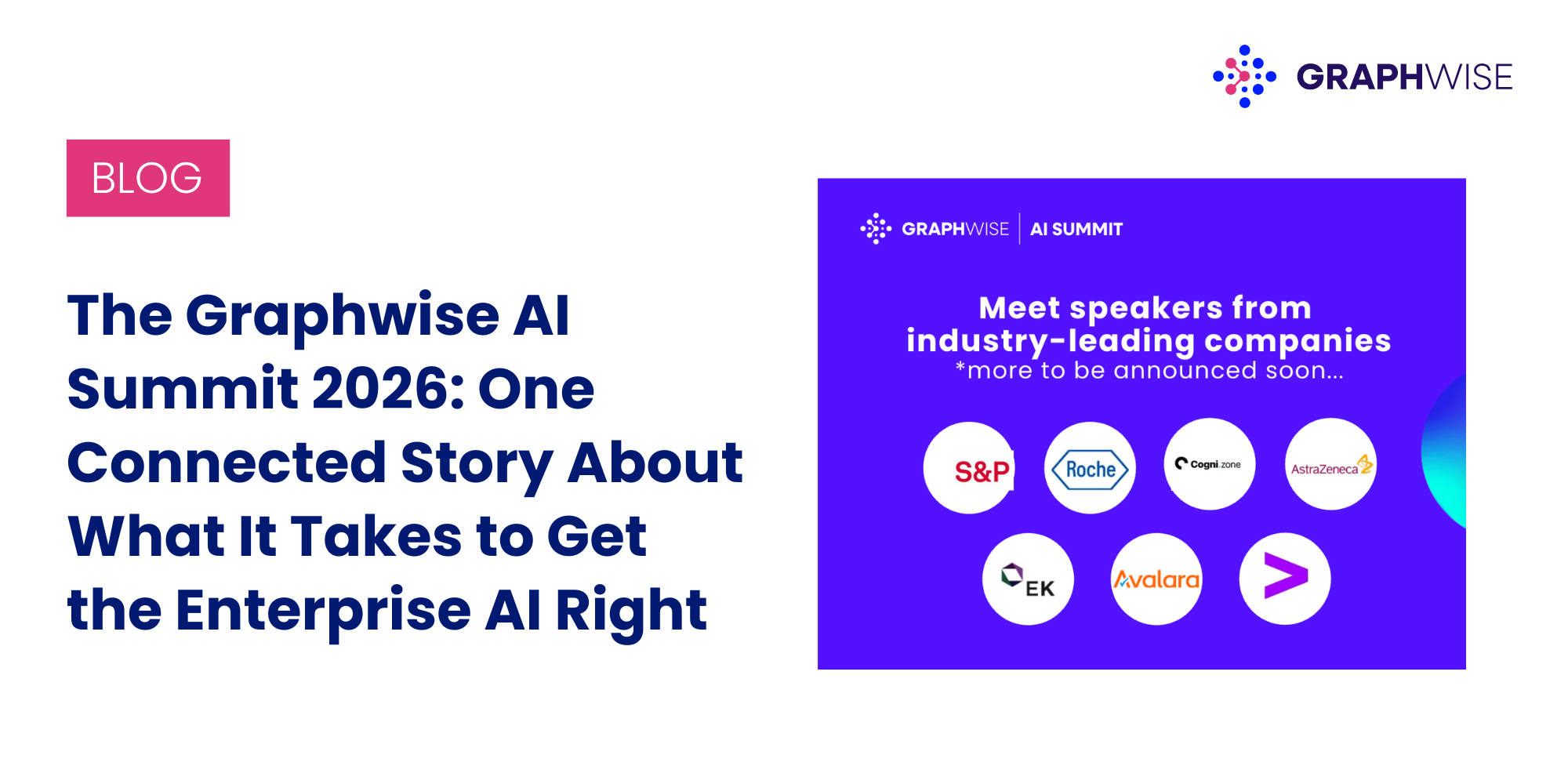
The Graphwise AI Summit 2026: One Connected Story About What It Takes to Get the Enterprise AI Right
Read about the Graphwise AI Summit with presentations and panels with Accenture, Roche, AstraZeneca, S&P Global and more.
Read more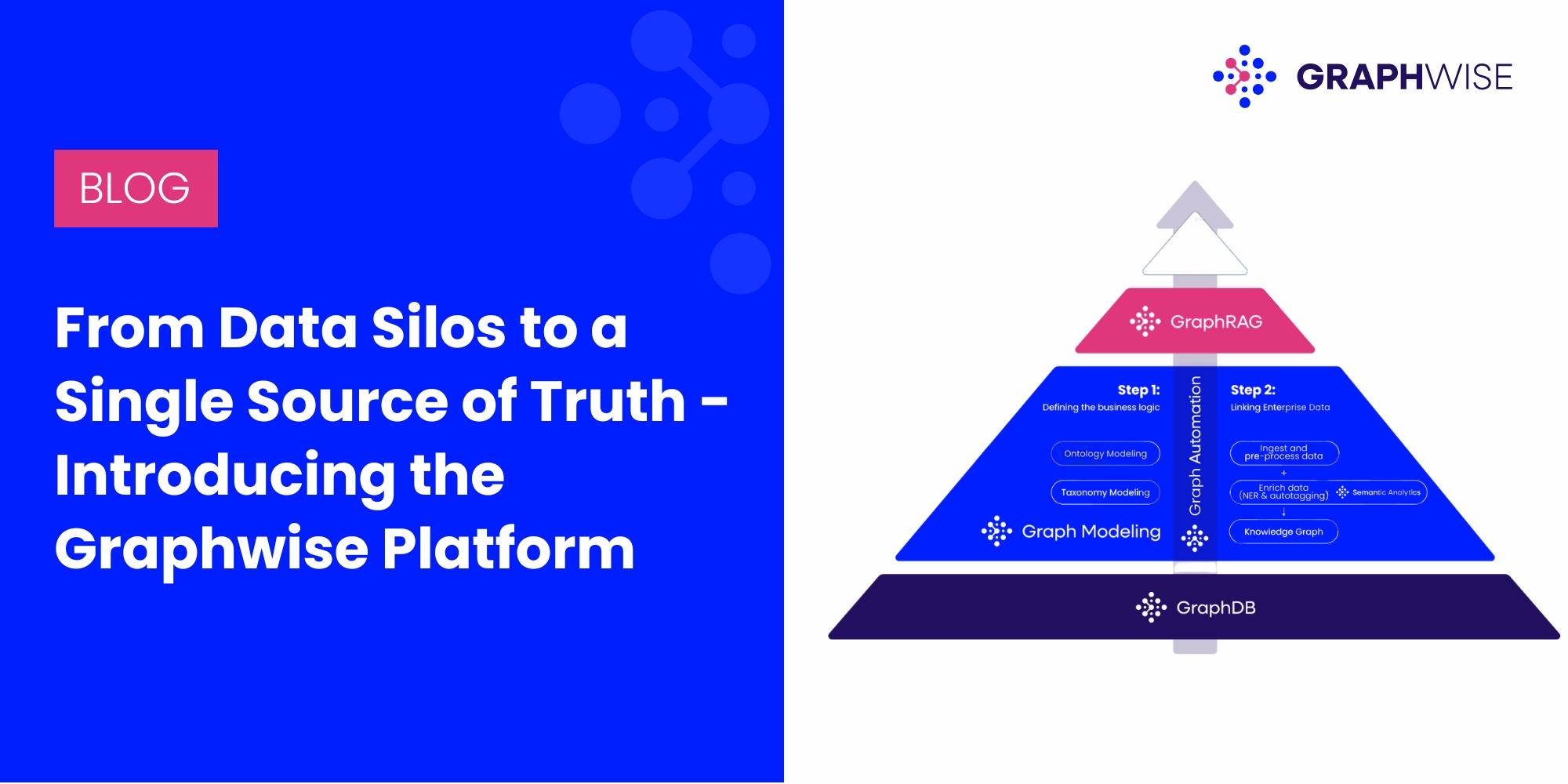
From Data Silos to a Single Source of Truth – Introducing the Graphwise Platform
Read about how Graphwise Platform is the solution to AI hallucinations by grounding it with verifiable and tracible data
Read more
Reducing Risk and Rework — How GraphRAG Delivers ROI in Compliance and Legal Workflows
Read about how GraphRAG bases AI on verifiable facts to ensure accuracy, audit trails & faster regulatory responses for measurable ROI.
Read moreFAQ
Any Questions? Look Here
A durable AI business case is built on a semantic backbone that decouples business logic and domain context from the underlying technology stack. This ensures that institutional knowledge remains independent of any specific tool or vendor. By leveraging an enterprise knowledge graph, organizations create a portable, interoperable "data flywheel" that captures unique business rules, relationships, and taxonomies. This approach allows AI models to be grounded in a permanent, governed layer of verifiable facts. So, as LLMs or platforms evolve, the foundational intelligence remains a proprietary asset that can be easily re-connected to new systems.
Companies balance centralized governance with team-level flexibility by adopting a federated governance model, often implemented through a Data Mesh or a semantic backbone. In this framework, a centralized body establishes the shared infrastructure to ensure interoperability and compliance across the organization. Meanwhile, individual domain teams are granted the autonomy to own, model, and enrich their specific data products. This ensures that AI data remains aligned with local business context and innovation needs.
A semantic backbone is a centralized, knowledge graph-based infrastructure. It unifies fragmented enterprise data with domain knowledge, taxonomies, ontologies, and business rules into a machine-readable "contract on meaning." Enterprises need this foundation for AI because it acts as a "semantic nervous system". It transforms disconnected silos into a shared source of truth and grounds AI models in verifiable facts. A semantic backbone provides a common mental model for multi-agent systems and enables precise, traceable data retrieval. This significantly reduces AI hallucinations, ensures consistent governance, and allows organizations to scale AI initiatives from fragile prototypes to reliable, production-grade solutions.
AI agents are transforming the lifecycle of knowledge graphs as they automate the traditionally labor-intensive processes of construction and maintenance with intelligent, self-improving workflows. These agents use autonomous information extraction and semantic tagging to ingest unstructured data from diverse sources. At the same time, LLM-driven modeling tools proactively propose new concepts, synonyms, and relationships for ontologies to accelerate the development cycle. By continuously reconciling disparate terminologies and maintaining a traceable lineage of all updates, AI agents ensure that knowledge graphs remain dynamic, accurate, and scalable "living" systems that evolve alongside the enterprise's data landscape.