
The Graphwise AI Summit 2026: One Connected Story About What It Takes to Get the Enterprise AI Right
Join us for two days of presentations and panels with Accenture, Roche, AstraZeneca, S&P Global and more

Main Takeaways
- The Graphwise AI Summit 2026 returns October 7–8 as a free, virtual, two-day event centered on earning trust in AI and building the infrastructure to support it at enterprise scale.
- Day 1 focuses on moving from AI pilots to production, covering ROI proof, governance, and explainability, with speakers from Enterprise Knowledge, Roche, and Accenture.
- Day 2 dives into architecture and implementation, tackling issues like fragmented data and unreliable retrieval, featuring Avalara, AstraZeneca, S&P Global, Cognizone, BitBang, and a Graphwise Playground Kickoff.
- The summit targets decision-makers, governance leads, and technical builders across industries (banking, healthcare, energy, transportation) who need practical, expert-led guidance to get AI into production successfully.
If you were with us for the inaugural Graphwise AI Summit last year, you already know the format. A virtual gathering where business leaders and technical practitioners dig into the intersection of knowledge graphs and AI, and what it takes to move from experimental pilots to production-ready, enterprise-grade systems.
This year, on October 7–8, 2026, the Graphwise AI Summit returns built around one connected story: earning trust in AI and building the infrastructure to back it up. It is an expert-led event. Every session comes from the enterprises and partners doing the work: decision-makers, architects, governance leaders, and engineers sharing what worked and what didn’t in today’s AI market.
It’s free, fully virtual, and recorded, so one registration brings the whole library back to your team.
State-of-the-art
In our recent research, we found that nearly 90% of CIOs are increasing budgets, and most enterprises are well past their first pilots. Yet only 95% of organizations report zero return on their initial GenAI investments. Also, 27% of enterprise apps are actually integrated, with the average company running close to 1,000 disconnected systems. And half of all deployed AI agents still operate in isolated silos.
The blocker isn’t the models. It’s fragmented context and infrastructure that was never built to carry trust at scale. That’s the challenge the Graphwise AI Summit 2026 is built around: we invited the people closing it, across diverse industrial verticals: banking, healthcare, energy, transportation, and more.
Two days, one connected story
We’ve built an agenda that follows AI from the boardroom to the codebase.
Day 1 — Where ROI Meets Trust (Wednesday, October 7)
Most generative AI pilots never make it to production. They stall for familiar reasons. There’s no roadmap to scale, and no early proof of business impact to keep stakeholders on board. Even when systems do go live, they often work like black boxes, leaving teams unable to explain or audit AI-generated answers to regulators. And without clear ownership or governance, promising initiatives can produce biased outcomes that cost real money instead of saving it.
Day 1 looks at what it actually takes to close these gaps and move from proof-of-concept to production with confidence. Featuring Enterprise Knowledge, Roche, Accenture, and panels on AI business cases.
Day 2 — Infrastructure & Implementation (Thursday, October 8)
Even AI systems that work in a pilot often break down at scale. Vector-based retrieval alone can’t guarantee precision, data stays scattered across structured and unstructured sources, and stitching together separate tools drives up cost and complexity. The result: hallucinated answers, silos that never quite connect, and infrastructure too fragile to maintain long-term.
Day 2 looks at the architecture and hands-on patterns that solve these problems, grounding AI in verified data so systems stay accurate, traceable, and built to last. Featuring Avalara, AstraZeneca, S&P Global, Cognizone, BitBang, and the Graphwise Playground Kickoff — a live look at our recent releases.
This second day of the Summit also dedicates a full session to Graphwise Platform Pulse – Episode #2 — our webinar series where we deep dive into our Platform, share recent updates and what’s upcoming. The first episode back in July gave an overview of the platform, its components, and where one can start.
Why you want to come
This event is for you if you resonate with even just one of these:
- You need to show what the AI budget actually bought — real numbers, not another pilot report.
- You’re the one who signs off on AI going live — and you need it explainable and auditable before it gets anywhere near production.
- You’re building the data infrastructure everyone else depends on — and you’re done patching around silos and one-off integrations.
- You’re trying to get something out of a pilot and into production — before the next budget cycle closes the window.
Building on the success of our first summit, this year’s edition goes straight to the implementation lessons: the governance approaches, architectural decisions, and practical steps it takes to run AI in high-stakes environments. If you want to understand how knowledge graphs work as the critical infrastructure behind reliable AI, this is where you’ll hear it straight from the industry innovators and technical experts doing the work.
Let’s make this event special. Together.

Details
The Enterprise Semantic Backbone: A Foundation for Reliable and Scalable Agentic AI
Discover the exact structural roadmap your organization needs to establish a good foundation, activate autonomous enterprise intelligence, and successfully deploy trusted, scalable Agentic AI.
Learn moreRecommended Content
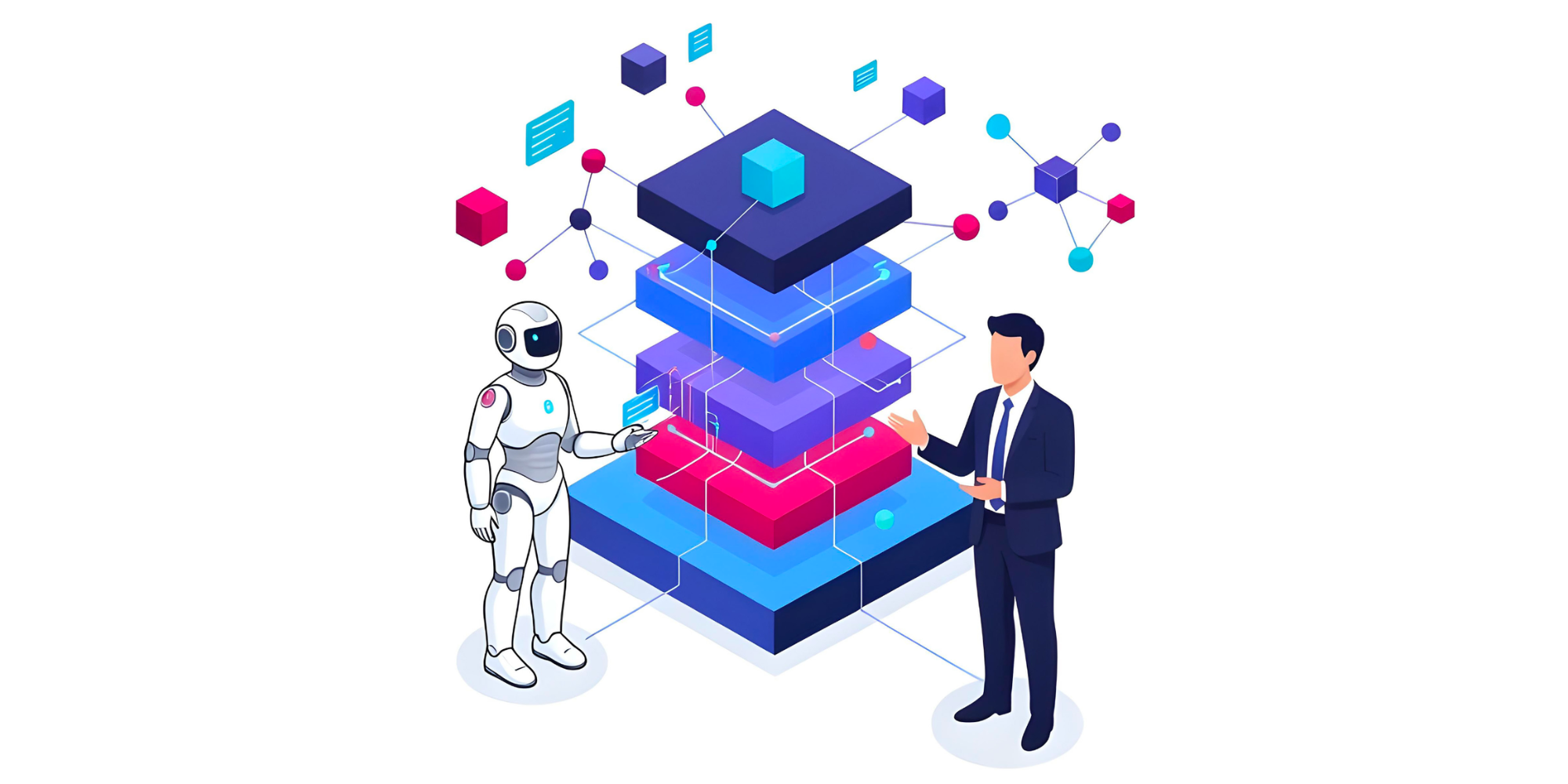
The Enterprise Semantic Backbone: A Foundation for Reliable and Scalable Agentic AI
Learn how a Enterprise Semantic Backbone is a good foundation for reliable and scalable Agentic AI.
Read more
Accelerating Discovery — How GraphRAG Drives ROI in R&D and Knowledge-Intensive Workflows
Read about how GraphRAG helps organizations cut search time, speed up discovery, and turn AI pilots into measurable ROI.
Read more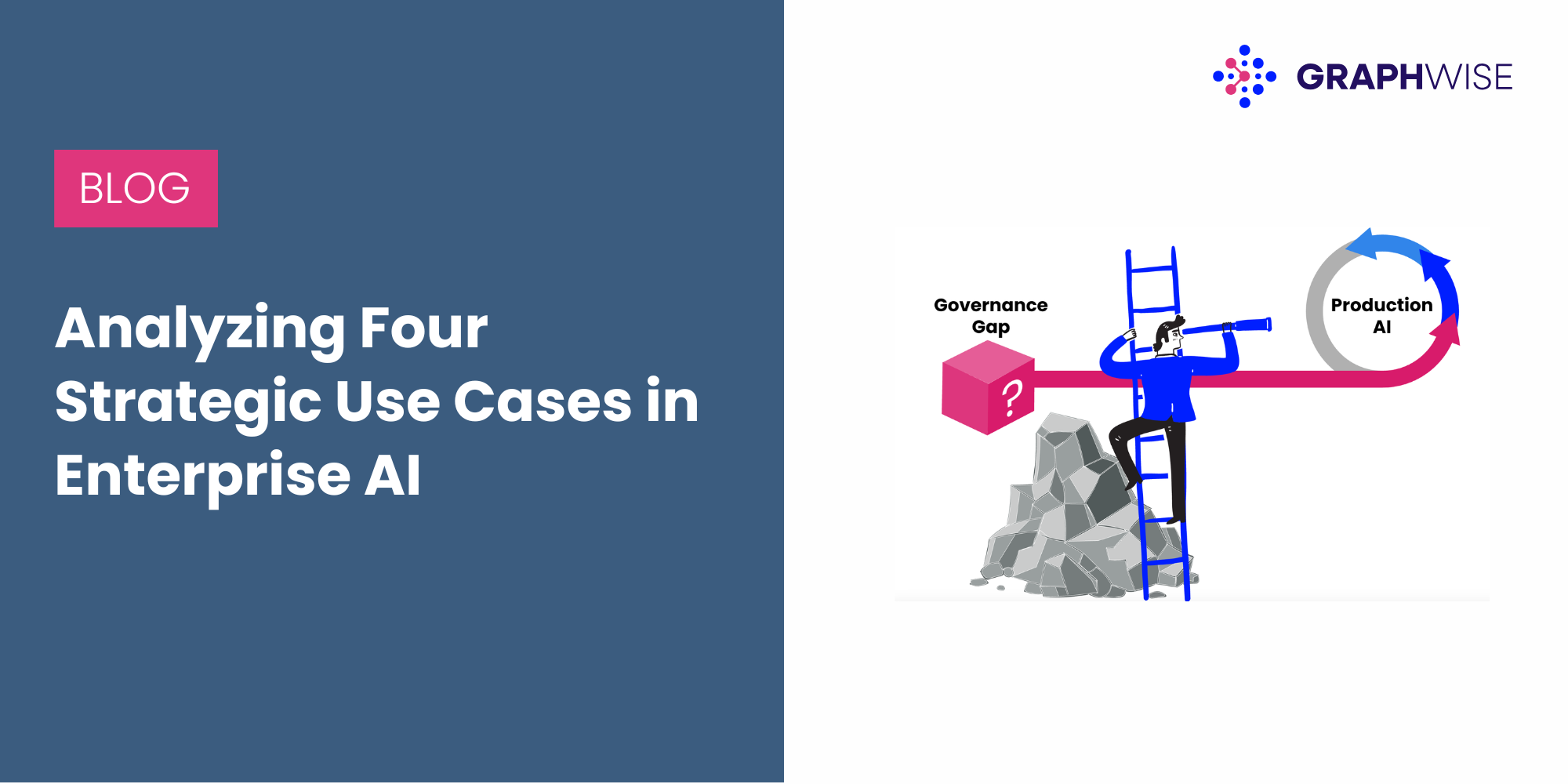
Analyzing Four Strategic Use Cases in Enterprise AI
Read about how the semantic backbone is what separates systems that work in demos from systems that hold up in production.
Read moreFAQ
Any Questions? Look Here
Companies that successfully scale AI differentiate themselves by moving beyond fragmented data silos to establish a robust, "knowledge-first" foundation — leveraging semantic layers and knowledge graphs to ground AI models in proprietary enterprise context. While organizations stuck in "pilot mode" often focus on narrow, context-light experiments that fail to withstand the complexity and edge cases of real-world production, successful scalers prioritize operationalizing impact through structured de-risking processes and an integrated technology stack. The defining factor is the shift from viewing AI as a plug-and-play tool to treating it as a core architectural capability, ensuring data readiness, establishing measurable success metrics, and building a compounding layer of enterprise intelligence that aligns technical outputs with strategic business value.
Enterprise data integration remains notoriously difficult because modern tools primarily address technical connectivity — the "plumbing" — while the core challenges are rooted in semantic and organizational complexity. Most enterprise systems were historically built as isolated silos to serve specific business functions, resulting in a fragmented landscape where the same data is defined differently across hundreds of applications. Even with high-speed integration platforms, reconciling these "semantic misalignments" requires a unified understanding of what the data actually means, which is often lost in translation between departments. Furthermore, the sheer variety of data formats (structured, semi-structured, and unstructured) and the persistence of legacy architectures create a convoluted web of dependencies that technical automation alone cannot unravel without a robust, standards-based semantic layer.
AI systems hallucinate primarily because large language models are probabilistic by nature, predicting the next likely word based on general training data rather than verifying facts or accessing real-time, context-specific company knowledge. This lack of domain-specific grounding and the presence of fragmented or siloed data forces models to guess or infer information, leading to confident but false outputs. To reduce these hallucinations, organizations utilize Retrieval-Augmented Generation and knowledge graphs to provide a "semantic backbone" that grounds the AI in verified, proprietary facts. By implementing "Graph RAG" and semantic layers — which integrate ontologies and taxonomies to define business logic — AI models can reference structured knowledge instead of relying on statistical probability, significantly improving accuracy and trustworthiness.
AI agents often end up working in isolated silos primarily due to a lack of interoperability standards and shared semantic context across fragmented enterprise environments. Most agents are built within proprietary "walled gardens" using vendor-specific architectures, memory structures, and tool-calling protocols, which prevents them from communicating or delegating tasks outside their specific platform. Furthermore, agents typically inherit the underlying data silos of the organizations they serve; without a unified semantic backbone to provide a shared world model, these agents remain isolated islands of automation that cannot reconcile conflicting interpretations of data or coordinate intent across different departments.
In practice, AI governance involves establishing a structured framework of technical, ethical, and legal guardrails to ensure AI systems remain transparent, compliant, and aligned with organizational intent. This process moves beyond traditional data stewardship to include defining clear accountability to enforce reasoning constraints and data consistency. Practically, this entails maintaining rigorous data lineage, ensuring the explainability of model decisions, and logging interactions for auditability to mitigate risks like bias or "black-box" failures.
Companies can measure the real ROI of AI investments by transitioning from broad enterprise-wide metrics to application-specific KPIs defined at the outset of each project. Tangible value is best demonstrated through significant gains in operational efficiency, such as a 60% reduction in manual data effort or 75% time savings in generating complex reports, alongside measurable improvements in output accuracy—for instance, by leveraging knowledge graphs to reduce AI hallucinations from 15% to 4%. Additionally, tracking "Time-to-Insight" metrics, such as accelerating R&D hypothesis evaluation by 10x or shortening regulatory response times from days to hours, allows organizations to quantify labor cost savings and first-to-market advantages. Utilizing Proof of Value (POV) frameworks ensures these outcomes are validated with proprietary data, providing the concrete evidence needed to justify continued investment and secure executive buy-in.