
Navigating the Grid’s Digital Transition: Mastering CIM/CGMES 3.0 and Maximizing ROI with Graphwise
Graphwise's semantic technology platform helps European grid operators tackle the complex, costly challenge of CIM/CGMES 3.0 compliance by turning fragmented, manual regulatory processes into an automated, explainable, and continuously auditable system.

Main Takeaways
- European grid operators face a mounting compliance crisis due to regulatory overload, data silos, and manual auditing under CIM/CGMES 3.0.
- Graphwise shares CGMES's semantic foundations (RDF, SHACL, SPARQL), making it a natural backbone for grid compliance data.
- GraphRAG grounds AI in verified knowledge graphs for explainable, traceable answers—validated through a real project with Statnett.
- Graphwise delivers major ROI: 80%+ less manual mapping effort, faster regulatory response times, and lower audit costs.
The European energy landscape is undergoing an unprecedented transformation. To manage the influx of distributed renewable energy resources and to ensure stability across interconnected borders, grid operators must speak a unified digital language. Enter the IEC Common Information Model (CIM) and its European operational profile, CGMES 3.0.
While CIM and CGMES are essential foundations for modern smart grids, achieving and maintaining compliance remains a complex and costly challenge across the energy value chain. This affects transmission operations, distribution networks — including substations, customers, metering, assets, work orders, and maintenance — as well as market information and market operations. This article examines the standards, the operational and compliance challenges they create, and how semantic technology — specifically the Graphwise AI Suite — can transform this complexity into a scalable strategic advantage.
Decoding CIM and CGMES 3.0: The rulebook of the grid
At its core, the Common Information Model (CIM) is an object-oriented ontology developed by the IEC to represent all major components of an electric utility. To make it actionable for the European grid, ENTSO-E created the Common Grid Model Exchange Standard (CGMES), a highly regulated subset designed to standardize grid model exchanges. ENTSO-E also created the Network Code Profiles (NCPs) as the data underpinning the EU Network Codes regulations, addressing issues such as availability, contingency, reliability, grid disturbances, impact assessment, power schedules, remedial actions, security and sensitivity analysis, and country cooperation.
CGMES is a European implementation profile of CIM. It selects the CIM classes, attributes, and relationships required for specific grid-model exchange processes and supplements them with additional constraints and extensions. In this ecosystem:
- RDF gives each class, object, and relationship a machine-readable identity.
- RDFS describes the structure: the class hierarchy, and which attributes and relations apply to which classes.
- SHACL expresses strict rules for cardinalities, datatypes, values, and cross-profile consistency.
- SPARQL enables precise, high-performance queries across the model.
The compliance crisis: Industry pain points
All TSOs already use CIM/CGMES, mainly as a file-exchange format. Yet the slow migration from CGMES 2.4 to 3.0, without using CIM as the utility’s semantic data foundation, risks creating a severe compliance crisis driven by three major pain points:
1. Regulatory Overload and the “Unknown Unknowns”
Engineering and compliance teams are drowning in a dense, interconnected, and constantly changing web of regulations. Documents like the ENTSO-E Quality of CGMES Datasets and Calculations (QoCDC) contain hundreds of complex validation rules. Manually mapping these external rules to internal data models and software controls is an endless, labor-intensive task that is perpetually out of date. The critical fear is the “unknown unknown”—a missed requirement buried in a sub-clause that exposes the firm to failed data exchanges, audit failures, and reputational damage.
2. Fragmented Data Silos and Semantic Friction
Critical grid data is typically fragmented across disconnected systems such as SCADA, planning, and market systems, masking non-compliance risks across business units. Furthermore, legacy exchange formats like CIMXML often lack strict datatype definitions and use invalid RDF syntaxes, causing parsing headaches and integration bottlenecks. Organizations waste countless hours building custom, fragile parsers to compensate for these semantic mismatches, rather than focusing on grid security.
3. The Burden of Proof and Static Auditing
To exchange data on the European grid, applications must pass the strict Conformity Assessment Scheme (CAS) through accredited testing laboratories and dedicated conformity-validation tools. Preparing for these audits manually requires chasing data across the enterprise, producing static, backward-looking reports—often in spreadsheets—that lack traceability and are difficult for auditors to validate.
The Graphwise architectural fit: A shared semantic DNA
This is where Graphwise provides an unmatched architectural fit. CGMES and the Graphwise Platform share the exact same technological foundations: RDF, ontologies, knowledge graphs, SPARQL, and SHACL.
Graphwise acts as the enterprise Semantic Backbone. GraphDB can store and query interconnected CIM/CGMES datasets as a semantic graph and validate RDF data natively against SHACL constraints.
Graphwise Graph Modeling supports the governance of CIM-related vocabularies, while Graph Automation orchestrates ingestion and transformation across heterogeneous sources.
Most importantly, Graphwise deploys GraphRAG — Retrieval-Augmented Generation. Unlike traditional LLMs that rely on statistical guessing and are prone to hallucinations, GraphRAG grounds its generative AI in your verified compliance knowledge graph. It understands the strict formal semantics of grid regulations and delivers trustworthy, explainable answers.
Proven Energy sector experience: The Statnett success story
Graphwise has already demonstrated this approach through its collaboration with Statnett, Norway’s transmission system operator. During the 14-month Talk2PowerSystem research and development project, Statnett and Graphwise combined CIM-based power-system models, knowledge graphs, GraphDB, and LLMs to make complex grid information accessible through natural-language questions.
Power-system engineers traditionally need specialist query-language expertise to extract information from CIM models. Talk2PowerSystem bridges this gap by translating user questions into structured graph queries and returning answers traceable to the underlying model. The objective is not simply to provide a chatbot but to deliver reliable, explainable access to highly connected technical data.
This collaboration demonstrates that Graphwise’s capabilities are not limited to generic data-management scenarios. They have already been applied to real power-system models with a national transmission operator, addressing the exact semantic interoperability, CIM integration, explainability, national transmissionability, and knowledge-access challenges faced across the energy sector.
Unlocking strategic ROI: The business impact of Graphwise
Graphwise transforms compliance from a reactive cost center into a proactive, intelligent function, delivering highly measurable Return on Investment:
- More than 80% Reduction in Manual Mapping Effort: Graphwise automatically links external CGMES regulations and test use cases to internal software controls and policies. By providing a dynamic, unified layer, it proactively identifies compliance gaps and reduces the manual engineering hours required for regulatory mapping by over 80%.
- Regulatory Response Times Cut from Two Days to Under One Hour: When engineers or compliance officers have a complex standards query—for example, “What are the cross-profile consistency rules between SSH and EQ profiles?”—GraphRAG allows them to ask in natural language. By instantly retrieving answers backed by traceable source documents, response times are reduced from days to minutes, drastically improving engineering productivity.
- Slashed Audit Preparation Costs: Graphwise provides a live, continuous audit trail. Every data transformation and compliance decision is fully traceable in the knowledge graph. This eliminates the pre-audit scramble, heavily reducing preparation costs and ensuring organizations are always ready for formal conformity assessments and ENTSO-E interoperability testing.
- Significant Cost Savings and Mitigated Failure Risks: By executing structural and cross-profile SHACL checks before models reach downstream power-system calculation, simulation, and operational-analysis tools, Graphwise exposes unresolved references and version-mapping gaps early. This acts as an insurance policy, significantly decreasing the risk of operational failures, audit findings, and associated financial penalties.
Strategic Value by Stakeholder
A CGMES-focused Graphwise solution creates a governed semantic backbone whose value scales across the industry:
- TSOs and DSOs gain earlier detection of data-quality issues, a unified “Single Source of Truth” across operational silos, and continuous compliance monitoring.
- Software Vendors gain a powerful pre-assessment and mapping environment to test CGMES imports and exports, accelerating their time-to-market for CAS certification.
- Compliance Teams gain absolute traceability from ENTSO-E requirements to datasets and evidence, replacing anxiety with data-driven confidence.
Conclusion
Graphwise does not replace power system simulation software, electrical solvers, interoperability testing, or formal assessments under the ENTSO-E Conformity Assessment Scheme. Its role is to make compliance engineering connected, explainable, and highly efficient.
By combining CIM semantics, CGMES profiles, rigorous SHACL validation, and governed GraphRAG AI, Graphwise helps organizations move from repairing failed data exchanges to proactively preventing them. It is the ultimate investment to establish a trusted, high-performance data foundation for the digital European grid.
Want to dive in deeper?
- Decoding CIM and CGMES 3.0: The rulebook of the grid
- The compliance crisis: Industry pain points
- The Graphwise architectural fit: A shared semantic DNA
- Proven Energy sector experience: The Statnett success story
- Unlocking strategic ROI: The business impact of Graphwise
- Strategic Value by Stakeholder
- Conclusion
Details
Power System Digital Twin
Demonstrates how natural language interaction with complex power system data allows engineers to quickly trace grid relationships, identify issues, and access critical information - without needing to navigate multiple specialized tools.
Learn moreRecommended Content
Advancing Power System Analysis with AI and Semantic Data
Read about how Talk2PowerSystem enables power system engineers to query complex grid data using natural language.
Read more
Talk2PowerSystem: Democratizing Power System Analytics via Generative AI
Complex grid data is usually locked behind specialized analysts. Statnett and Graphwise present a natural language chatbot that lets anyone query intricate energy data with plain-language questions.
Read more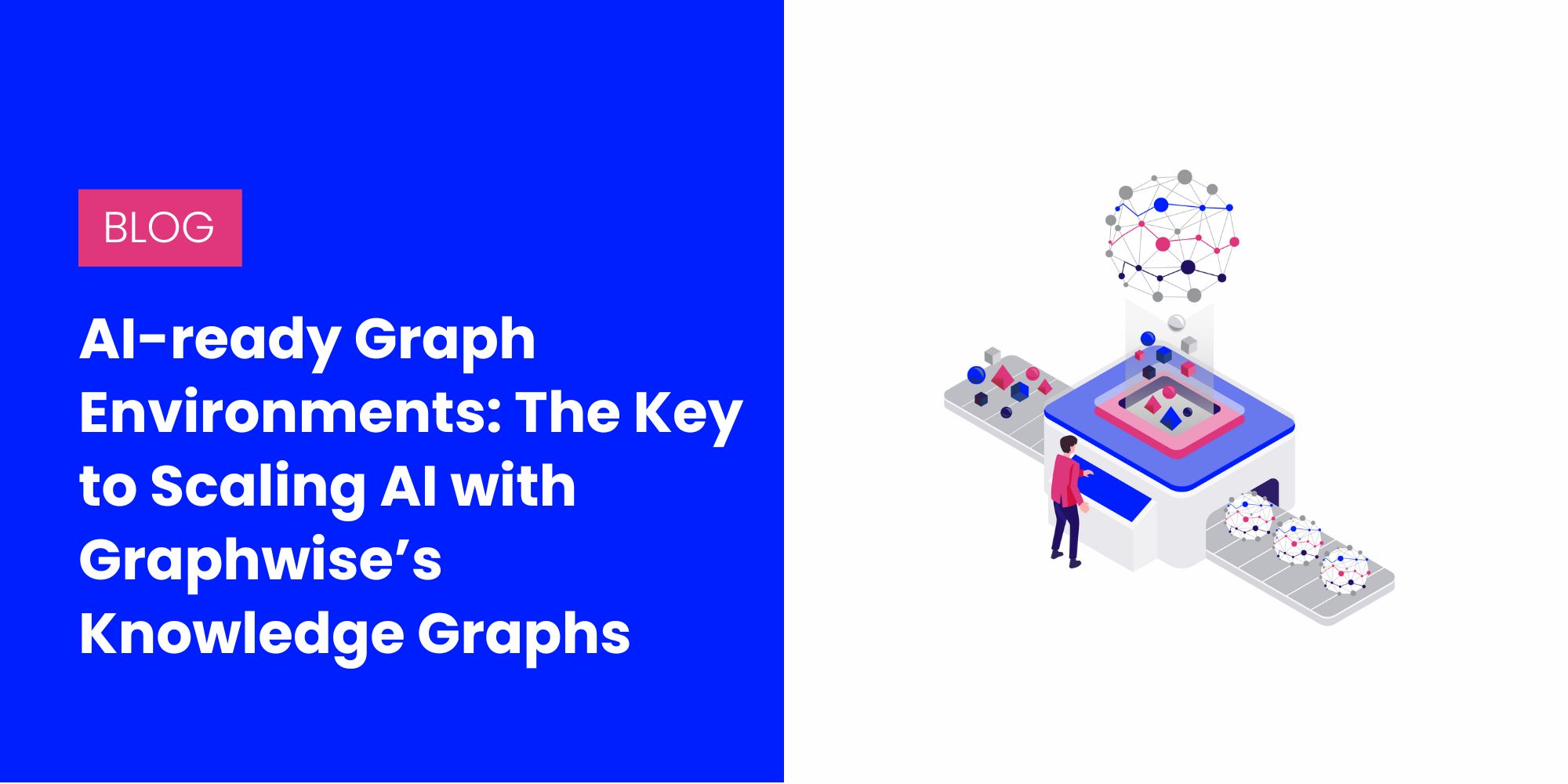
AI-ready Graph Environments: The Key to Scaling AI with Graphwise’s Knowledge Graphs
Read about why most enterprise AI fails and how Graphwise creates graph environments using knowledge graphs and semantics.
Read moreFAQ
Any Questions? Look Here
The IEC Common Information Model (CIM) is a comprehensive set of international standards (specifically IEC 61970, 61968, and 62325) that provides a unified, abstract framework for representing all major objects and operational processes within an electric utility enterprise. It is critical for power grids because it enables seamless data exchange and interoperability between disparate systems — such as SCADA, asset management, and market operations — ensuring that different technologies and stakeholders can communicate using a "common language." By standardizing how grid data is structured and shared, CIM facilitates the creation of Energy Knowledge Graphs and semantic digital twins, which are essential for optimizing grid performance, integrating renewable energy, and maintaining system reliability in a complex, data-driven Energy market.
Transmission System Operators (TSOs) are increasingly leveraging AI and semantic knowledge graphs to create "SmartGrid digital twins" that unify disparate data from IoT devices, sensors, and legacy systems into a cohesive 360-degree view of grid assets. This enhanced visibility enables state-of-the-art predictive maintenance to reduce downtime and proactive decision-making for more resilient, efficient, and future-ready grid operations. Furthermore, AI-driven compliance intelligence tools automate the mapping of complex global regulations to internal controls, providing real-time audit trails and continuous monitoring that minimize the risk of regulatory breaches while significantly reducing the time and costs associated with compliance audits.
Interoperability remains a significant challenge for interconnected European power grids primarily due to the immense complexity and volume of data generated by diverse actors, ranging from traditional transmission system operators (TSOs) to new decentralized prosumers and energy communities. This data is frequently trapped in isolated, incompatible silos or legacy architectures that lack consistent metadata management and standards-based models, hindering the seamless, real-time exchange required for modern grid reliability. Furthermore, the European Green Transition is rapidly shifting the energy landscape toward distributed resources, which necessitates a higher level of semantic integration to bridge different technical standards (like the Common Information Model) and ensure that information is machine-readable and actionable across national borders and varied energy market participants.
Explainable AI (XAI) refers to a set of methods and techniques that ensure the internal logic, decision-making processes, and outputs of artificial intelligence systems are transparent and understandable to human experts, contrasting with "black box" models where reasoning is opaque. In regulated industries such as finance, healthcare, and pharmaceuticals, XAI is a critical prerequisite because it ensures compliance with legal frameworks—like the EU AI Act or GDPR’s "right to explanation"—and provides the necessary traceability to justify high-stakes decisions. By making AI results interpretable, XAI fosters professional trust, allows human oversight to correct errors, and ensures that organizations can meet strict regulatory requirements for accountability and safety.